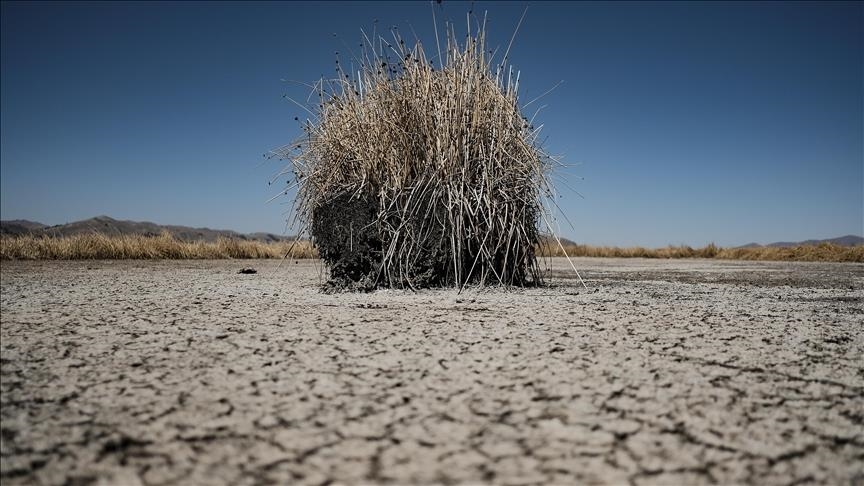
The sudden decline of the ancient Indus Valley Civilization, one of history’s great urban mysteries, was primarily driven by a series of prolonged and intensifying droughts spanning centuries, according to a new scientific study.
The research, published Thursday in the journal Communications Earth & Environment, suggests that environmental stress, rather than warfare or political upheaval, led to the abandonment of sophisticated Harappan cities across present-day Pakistan and northwest India between 3300 and 1300 B.C.
An international team of researchers reconstructed the region’s ancient climate using paleoclimate evidence gathered from caves, lakes, and advanced climate models. Their analysis revealed four distinct, severe droughts, each lasting more than 85 years, that gradually reduced rainfall and dried up major rivers and fertile soils.
“The most surprising finding is that the Harappan decline was driven not by a single catastrophic event but by repeated, long and intensifying river droughts lasting centuries,” lead author Hiren Solanki was quoted as saying.
Co-author Balaji Rajagopalan added that while the droughts were the main pressure, resulting food shortages and weak governance likely “compounded the effects,” pushing communities toward “decline and dispersement.”
The study highlights that the civilization, known for its advanced urban planning and early plumbing systems, initially thrived due to robust monsoons linked to cooler tropical Pacific temperatures. However, as the Pacific warmed in later centuries, rainfall weakened, leading to rising temperatures and decreased water flow.
The most intense drought, which peaked around 1733 B.C., lasted approximately 164 years and cut rainfall by 13% across nearly the entire region. Hydrologic modeling showed the devastating consequences, including shrinking lakes and severely reduced river flow, which impacted agriculture in inland areas and likely hindered boat trade along the waterways.
Despite these immense pressures, the Indus society demonstrated significant resilience over the centuries by adapting their farming techniques, diversifying their trade networks, and relocating settlements to more sustainable areas.
Liviu Giosan, a geoscientist not involved in the research, praised the study for synthesizing data on an “unprecedented scale” and noted, “It is remarkable that they survived so long under repeated climate crises.”
While researchers cautioned against drawing direct comparisons to modern times, they noted that the findings underscore the vital importance of understanding how the tropical Pacific region will respond to global warming, a critical question for South Asia today. (Anadolu)