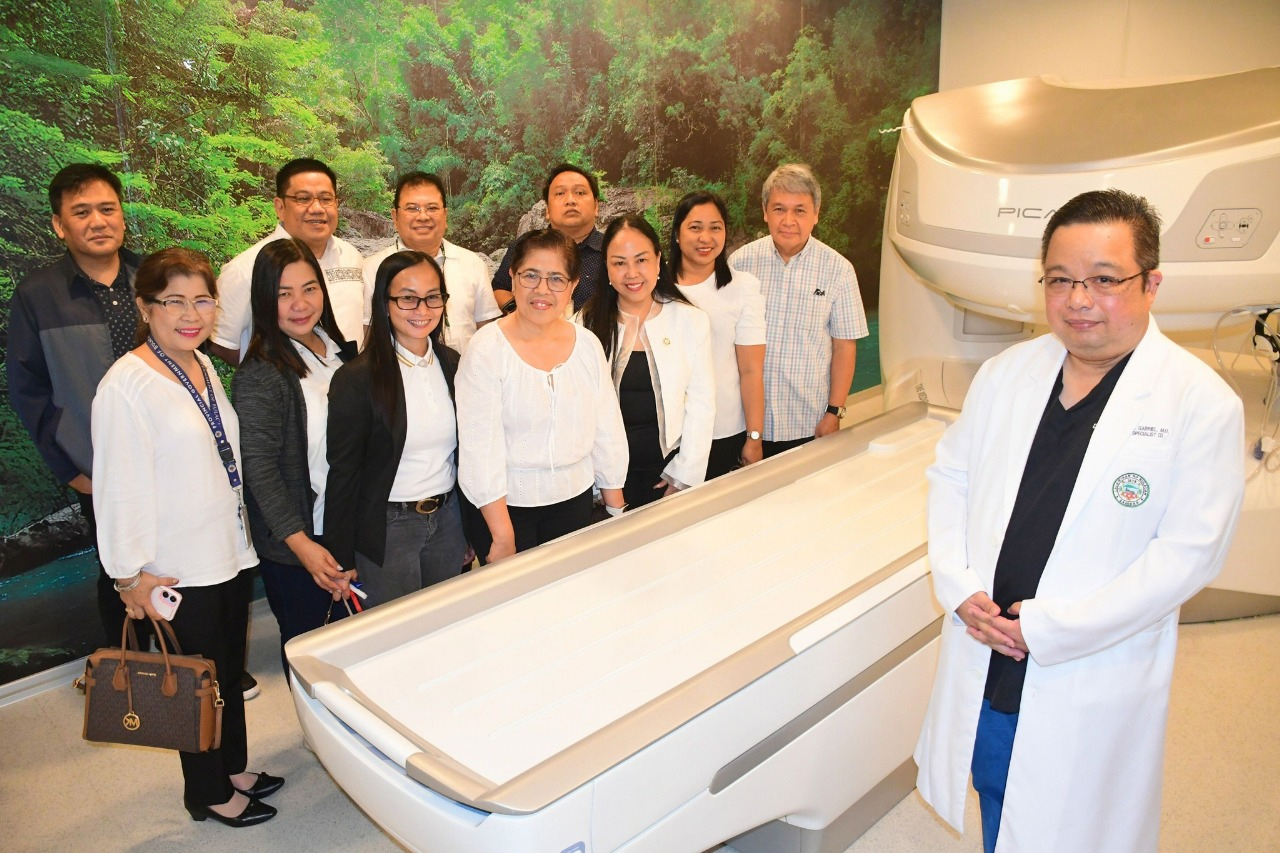

Bulacan, Philippines – The Province of Bulacan has made history as the first local government unit in the Philippines to establish and fund its own Magnetic Resonance Imaging (MRI) facility, a major step toward providing modern and affordable diagnostic care for Filipinos.
Located at the Bulacan Medical Center, the state-of-the-art open MRI system was developed by Time Medical Systems, a global leader in advanced imaging technology registered with the U.S. FDA and CE-marked in Europe. This innovation signals a breakthrough in making high-quality healthcare accessible at the local level.
Governor Daniel Fernando emphasized the importance of the project in bringing diagnostic services closer to the people. “For years, many Bulakenyos had to travel long distances and spend more to get MRI scans. Now, they can access world-class diagnostics right here in our province—safe, modern, and affordable,” he said.

Most MRI machines in the country remain in private hospitals, with fewer than 200 units nationwide as of 2022. Bulacan’s initiative breaks this mold as the first LGU-funded open MRI facility, showing how local governments can take proactive roles in strengthening healthcare delivery. Governor Fernando’s administration led the project to ensure residents no longer have to shoulder the financial burden of traveling to major cities for critical scans.
“This partnership between Time Medical and the Bulacan provincial government shows what can be achieved when the public and private sectors come together for the people,” said Joyce Socao, CEO and Managing Director of Time Medical Philippines. “World-class medical imaging should not be a privilege; it should be a right.”
The installed Time Medical PICA Open MRI is designed for comfort and accessibility. Its open design reduces anxiety for patients—especially children, seniors, and those with claustrophobia—while its helium-free permanent magnet system ensures low maintenance, energy efficiency, and stable operation even in provincial settings. A unique feature allows patients to be accompanied by loved ones during the procedure, making the experience less daunting.
The system also introduces the country’s first built-in Teleradiology feature, enabling radiologists to interpret scans remotely and in real time. This ensures faster turnaround times and gives smaller hospitals access to the expertise of specialists anywhere in the country.
“Our mission has always been to make advanced imaging available to everyone, not just those in major cities,” Socao added. “With Bulacan leading the way, we hope more LGUs follow and bring cutting-edge healthcare closer to home.”
Former Bulacan Governor and now Time Medical Chairman Roberto “Obet” Pagdanganan expressed pride in seeing his province take the lead. “This project symbolizes progress. It’s proof that when local leaders embrace innovation, they can change lives. Governor Fernando’s leadership shows how LGUs can shape a more inclusive and modern healthcare system.”
The initiative also supports President Ferdinand Marcos Jr.’s Memorandum Circular No. 26, which encourages local governments and private entities to collaborate under the Philippine Health Facility Development Plan 2020–2040. Bulacan’s investment transforms that policy into reality, proving that progress can start at the provincial level.
With the launch of this LGU-funded MRI facility, Bulacan not only brings top-tier diagnostic technology closer to its people but also sets a national model for future healthcare partnerships—where compassion meets innovation and governance meets vision.