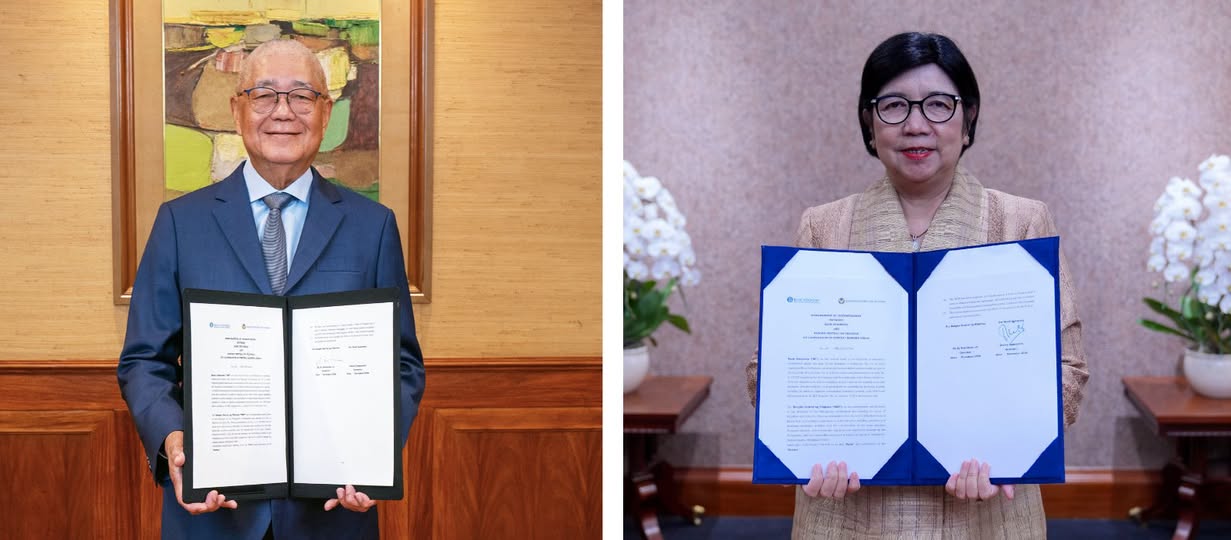

(Photo courtesy of BSP)
MANILA, Philippines – The Bangko Sentral ng Pilipinas (BSP) and Bank Indonesia (BI) have signed a memorandum of understanding (MOU) to expand cooperation on monetary policy, financial stability, digital banking, and other key areas of central banking.
The agreement, signed Friday by BSP Governor Eli Remolona Jr. and BI Governor Destry Damayanti, establishes a framework for closer collaboration between the two institutions in addressing emerging financial challenges and strengthening their respective capabilities.
In a joint statement, the central banks said the partnership covers monetary and macroprudential policies, payment and settlement systems, digital financial innovation, cybersecurity, and sustainable finance.
The agreement also includes cooperation on Islamic finance, financial inclusion, anti-money laundering, counter-terrorism financing, data sharing, and human resource development.
Remolona emphasized the importance of closer coordination as central banks face increasing global economic uncertainty, rapid technological developments, and evolving cybersecurity threats.
“This cooperation is especially important as central banks navigate growing uncertainty, rapid technological change, cybersecurity risks, and the continuing transformation of payment systems. By sharing our experience and working together, we can respond more effectively to these common challenges,” Remolona said.
Meanwhile, Damayanti said the agreement would pave the way for more concrete initiatives, particularly in facilitating local currency transactions and improving cross-border payment systems.
“This MOU reflects the commitment of both institutions to take concrete steps toward impactful collaborations in various areas of mutual interest, such as local currency transactions and cross-border payment,” she said.
The partnership is expected to strengthen financial cooperation between the Philippines and Indonesia while supporting efforts to modernize banking systems, improve financial connectivity, and promote regional economic integration.