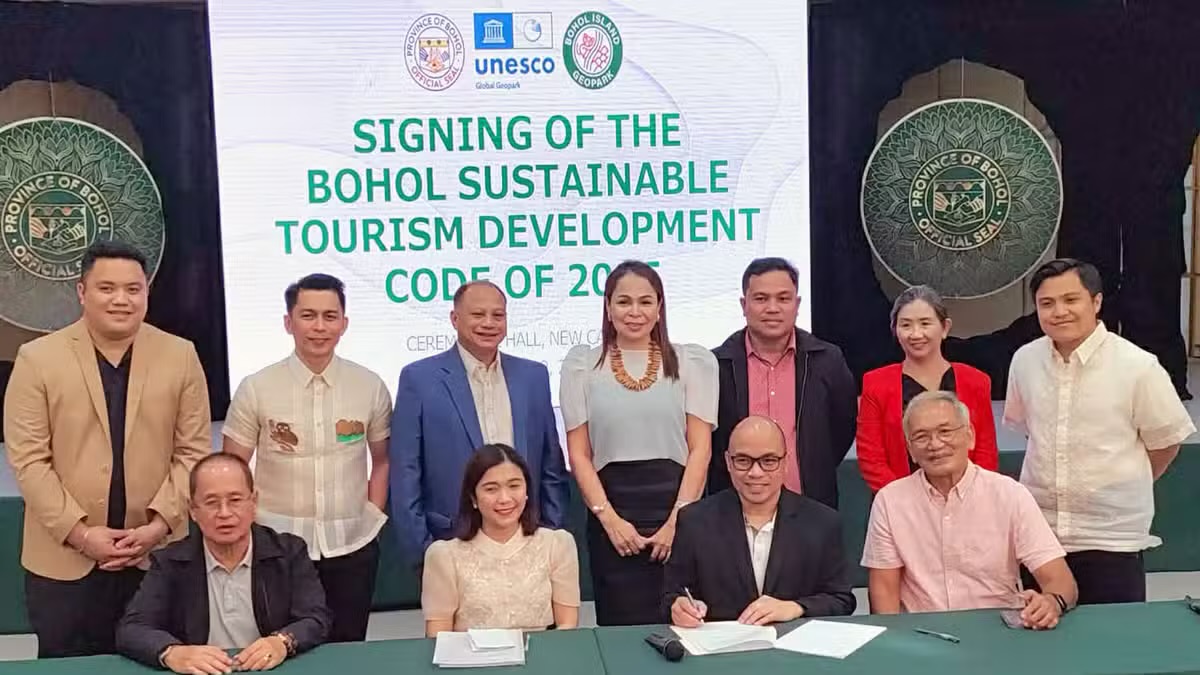
Recognizing the importance of promoting a healthy balance between economic development and environment conservation, Bohol governor Erico Aristotle ‘Aris’ Aumentado has signed into law the Bohol Sustainable Tourism Development Code of 2025 that would effectively manage tourism growth in the island province while protecting the surrounding environment.
The new law’s signing was held at the New Capitol Building of the province and was witnessed by Vice Governor Nick Besas, members of the Sangguniang Panlalawigan as well as local tourism and environmental stakeholders of Bohol.
As a landmark measure aimed to support the promotion of local tourism, protection of the environment and local communities and preservation of the province’s cultural heritage, the tourism code is expected to enhance tourism that would bring in more tourists who appreciate the beauty and value of nature, culture and herrditament.
Authored by provincial board member Jiselle Rae ‘Jamie’ Aumentado Villamor, the law replaces outdated tourism policies with a sustainability-based framework aligned with Bohol’s development goals and its recognition as the country’s first United Nations Educational, Scientific and Cultural Organization (UNESCO) Global Geopark.
Aumentado described the updated Tourism Code as the start of a “new chapter” for Bohol as a premier tourism destination and a timely response to the evolving needs of the tourism sector.
“It diversifies our tourism offerings, addresses long-standing gaps, and ensures that growth remains adaptive, resilient and beneficial to all Boholanos,” the governor pointed out.
Aside from this, the new tourism code aligns tourism development with Bohol’s Strategic Change Agenda, emphasizing sustainable growth and human development while reinforcing the province’s vision of becoming a “smart, resilient, and inclusive” province.
“This is only the beginning. Tourism growth must translate into real benefits for our communities,” he stressed while thanking the Sangguniang Panlalawigan led by Vice Gov. Besas and the stakeholders as well who helped forge the measure mandating a six-year Provincial Tourism Development Plan aligned with national tourism policies and UNESCO’s geopark principles.
More importantly, the code authorizes the collection of revenue, of which 50 percent will fund tourism development and sustainability programs while 20 percent will go to the island’s barangays for basic services and livelihood.
The law also institutionalizes a ‘Boholano First’ policy that will prioritize Boholanos in tourism employment and services and introduce the Ultimate Boholano Identity (UBI) Seal of Excellence, a voluntary recognition system for establishments that uphold cultural authenticity, environmental sustainability, safety, and fair pricing.
Finally, it also strengthens inter-LGU coordination through designated Tourism officers, local tourism councils and Destination Management Clusters such as Panglao, Chocolate Hills and Loboc–Loay, alongside provisions on carrying capacity enforcement, visitor management, standardized signages and conservation measures.