
The Association of Southeast Asian Nations (ASEAN) and the United States have adopted a new two-year work plan aimed at expanding trade and investment cooperation in areas including the digital economy, agriculture, trade facilitation and micro, small and medium enterprises.
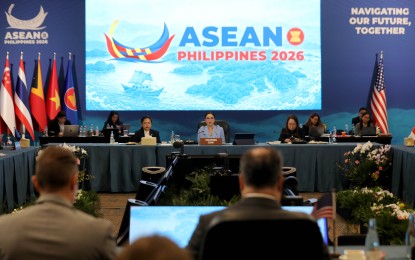
The 2026–2027 ASEAN-US Trade and Investment Framework Arrangement (TIFA) Work Plan was endorsed during the ASEAN Economic Ministers-United States Trade Representative Consultation in Manila on Sunday.
The meeting was co-chaired by Trade Secretary Ma. Cristina Roque and US Deputy Trade Representative Ambassador Rick Switzer.
In a joint statement, ASEAN and US economic ministers said the new plan builds on the 2025–2026 TIFA Work Plan, which produced initiatives covering the digital economy, trade facilitation, intellectual property rights, regulatory practices and agriculture.
The two sides also reaffirmed their commitment to keeping trade corridors open, strengthening supply chains and expanding investment ties amid regional and global economic challenges.
Preliminary ASEAN data showed that two-way merchandise trade between ASEAN and the US reached USD550.5 billion in 2025, while US foreign direct investment in the region totaled USD30 billion.
Under the new work plan, cooperation will cover the digital economy, MSME development, trade facilitation, intellectual property, standards, regulatory practices, labor, agriculture, competition and consumer protection, and strategic trade management.
The ministers said the ASEAN-US TIFA, signed in 2006, remains the main platform for advancing economic cooperation between the two sides and should continue to adapt to changing trade priorities.
They also cited the US-ASEAN Connect Series for supporting digital cooperation, MSMEs and business linkages, as well as the ASEAN-US Partnership Programme for providing technical assistance and capacity-building support to ASEAN member states.
ASEAN and the US likewise reaffirmed the importance of efforts to improve the World Trade Organization and welcomed plurilateral initiatives addressing emerging trade issues.