
Global health and beauty powerhouse AS Watson is accelerating its sustainability drive, unveiling a strengthened commitment to cut virgin plastic use in its own-brand packaging by 21 percent by 2030, using 2022 as its baseline year.
The enhanced target, formally aligned with the Ellen MacArthur Foundation’s Global Commitment 2030, underscores the retailer’s push to advance circular economy principles and curb plastic waste across its international network.
The refreshed pledge is now publicly listed on the Foundation’s Global Commitment platform, reinforcing AS Watson’s position among global companies taking measurable steps to address plastic pollution.
Driving change where it matters most
The 21 percent reduction goal focuses on four key packaging streams where the company sees the greatest potential for impact: product packaging, in-store carrier bags, e-commerce parcels, and single-use plastics in warehouses.
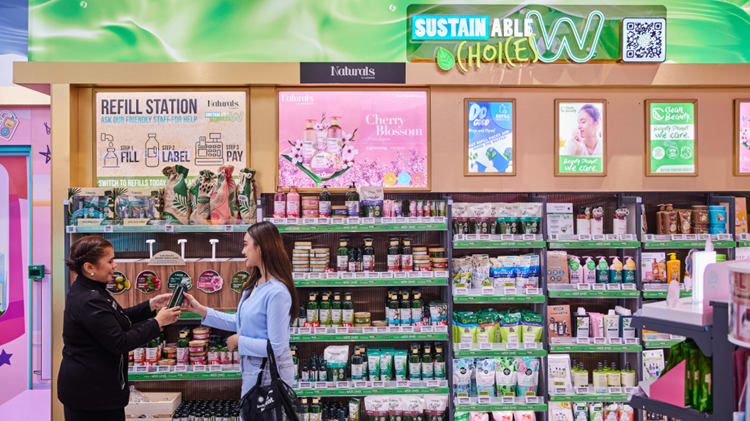
To meet the target, AS Watson is intensifying efforts to eliminate unnecessary packaging, increase the proportion of recycled plastic content, redesign packaging to improve recyclability and reusability, and expand refill and reuse systems across its brands and markets.

Sebastien Pivet, Chief Sustainability Officer and QA Director of AS Watson, emphasized the urgency of the initiative.
“Reducing plastic waste is one of the most urgent environmental challenges of our time, and retailers have a responsibility to lead this transition. By setting an ambitious 21 percent reduction target for virgin plastic in our own-brand packaging by 2030, we are turning our 185-year legacy of care into clear, measurable actions that cut plastic at source across all our markets. By expanding refill and reuse systems and increasing recycled content, we’re making significant progress towards reducing plastic waste from our operations,” he said.
Pivet added that as the company marks its 185th anniversary, sustainability remains central to its long-term strategy. “Sustainability shapes every decision we make, and it will continue to guide how we innovate and grow responsibly alongside our customers and communities.”
From strategy to store shelves
Beyond high-level commitments, AS Watson has begun translating policy into visible product and packaging changes across its retail brands.
In Asia, Watsons China redesigned collagen hand cream gift packs by removing plastic windows, cutting 2.36 tons of plastic use. Plastic trays were also replaced with FSC-certified paper trays in collagen hand and body care packs, saving an additional 5.26 tons.
In Europe, Superdrug revamped its Naturally Radiant range packaging by removing laminated mirror board. All cartons are now fully recyclable and FSC-certified, and each SKU contains at least 30 percent recycled plastic content — a move that significantly improves material circularity while maintaining product appeal.
A local push in the Philippines
In the Philippines, Watsons Philippines is aligning with the group-wide plastics agenda through practical, customer-facing initiatives.
“At Watsons Philippines, we support this campaign by transitioning our stores from plastic to paper bags and encouraging customers to bring reusable bags. We are also expanding the distribution of our Recycle for Rewards bins, inviting customers to return empty personal care plastic bottles, while promoting our better packaging, refill packs, and reuse products both in-store and via the Watsons app, making sustainable choices easy and accessible for Filipino customers,” said Danilo Chiong, Managing Director of Watsons Philippines.
The retailer’s Recycle for Rewards program, alongside refill packs and reusable product lines, is designed to nudge consumer behavior toward more sustainable habits while reducing plastic leakage into landfills and waterways.
AS Watson is also urging businesses, suppliers, and retail peers to align with the 2030 Plastics Agenda for Business, emphasizing that systemic change requires collaboration across the value chain. By combining responsible sourcing, smarter packaging design, and customer engagement, the company believes the retail sector can scale circular solutions that deliver measurable environmental gains.
With its sharpened 2030 target, AS Watson signals that plastic reduction is no longer a peripheral sustainability effort but a core operational priority — one that ties corporate legacy to future-ready environmental stewardship.