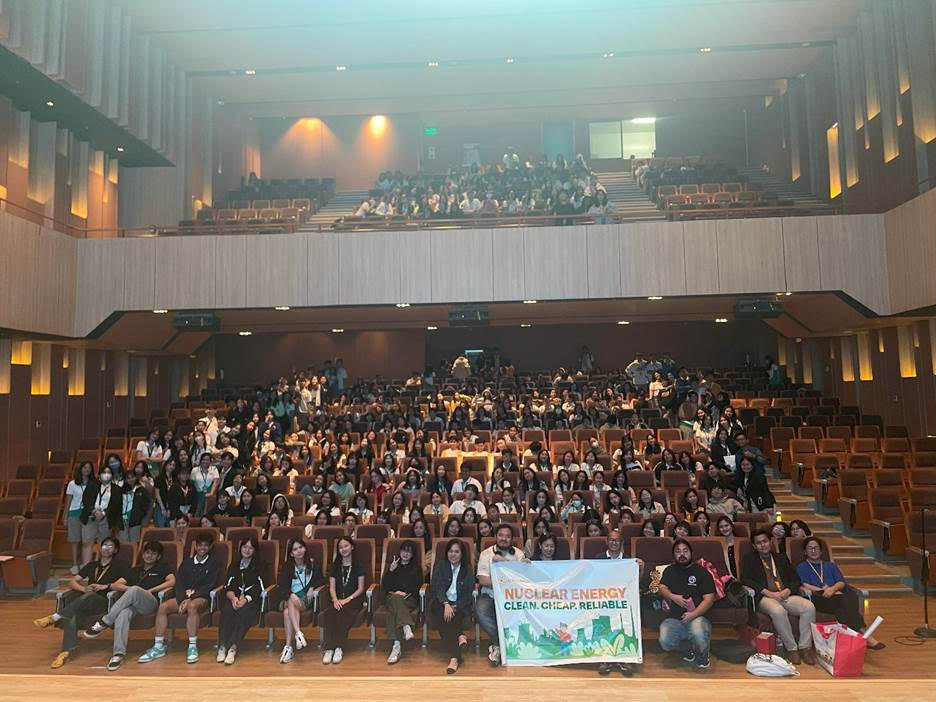

Alpas Pinas, a non-stock, non-profit organization committed to advocating for clean, affordable, and reliable energy, led a thought-provoking forum on the role of nuclear energy in the Philippines’ future.
The event, held at the University of Santo Tomas Senior High School (UST-SHS) and hosted by the Humanities and Social Sciences (HUMSS) Faculty, aimed to inspire students to become active participants in shaping the country’s energy future.
The forum highlighted nuclear energy as a key solution to the Philippines’ ongoing energy challenges, emphasizing its potential to deliver consistent power while supporting inclusive and sustainable development. At its core, the event encouraged young Filipinos to become informed leaders and advocates for energy transformation.
Alpas Pinas Lead Convenor Gayle Certeza, alongside members Gabrielle Andrea Tresvalles and Augustine Narcida, spearheaded the discussion. Together, they tackled widespread misconceptions about nuclear power, explained the nation’s current energy landscape, and underscored the urgency of transitioning to cleaner alternatives.
Certeza opened by shedding light on the Philippines’ heavy dependence on fossil fuels, noting that 78% of the country’s energy comes from these sources. She described how coal-fired power plants—while powering modern life—release pollutants that harm the environment.
“Nuclear energy doesn’t emit greenhouse gases and offers a much denser power source,” Certeza explained. “It’s capable of meeting our long-term electricity needs without compromising the planet.”
Tresvalles focused on the direct benefits of nuclear energy for the youth, stressing how it could create future job opportunities and ensure long-term energy security.
“As early as now, students can be involved,” she said. “You have the potential to influence research and policy decisions that determine how energy is produced and used in the Philippines. This isn’t just a science issue—it touches on health, ethics, governance, economics, and justice.”
Narcida brought attention to the growing energy demands of artificial intelligence (AI), pointing out the significant power consumption behind popular tools like ChatGPT.
“For example, a single ChatGPT prompt can consume the equivalent of 12 minutes of a laptop’s battery,” he said. “With billions of daily interactions, the power needed is massive. As AI and tech continue to expand, reliable electricity will become even more critical.”
He added, “You may question what I’m saying, but the truth remains—we need energy, and without it, innovation can’t move forward. We’re already falling behind.”
During a fireside chat segment, Certeza urged students to be vocal advocates, emphasizing the role of the youth in pushing for change.
“Talk about nuclear energy with your family, your friends, and online,” she encouraged. “Your generation has the courage and platforms to start conversations that matter. Keep that passion alive—you are part of this fight.”
Tresvalles echoed her sentiment, calling on students to take ownership of the movement.
“Be an activist in your own way,” she said. “The mission to secure clean, reliable, and affordable energy rests with all of us. Believe in your power to shape the future.”
Closing the event, UST-SHS Faculty Member Leilani P. Arocha expressed her hope that the forum had a lasting impact on the students.
“I hope today’s discussion deepened your awareness of how energy affects our lives and inspired you to advocate for sustainable solutions,” she said. “This isn’t just about science or policy—it’s about building the future of our nation.”
The event not only broadened students’ perspectives on nuclear energy but also empowered them to see themselves as catalysts for change in the country’s journey toward a sustainable and energy-secure future.