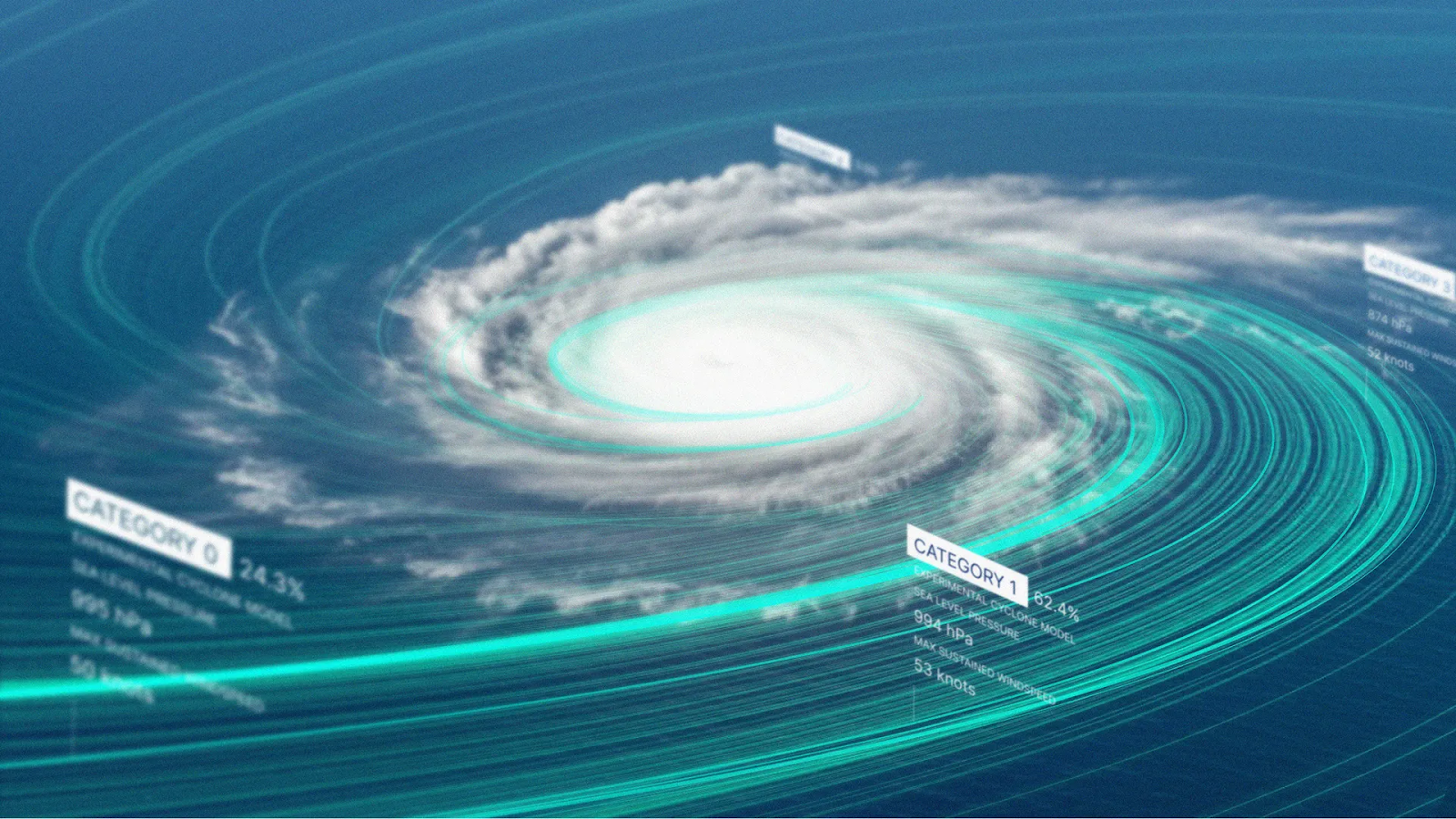

Google’s newest artificial intelligence models are poised to strengthen the Philippines’ frontline defenses against climate-driven disasters, providing local weather experts with sharper, faster, and more reliable tools to predict extreme weather.
As one of the world’s most disaster-prone nations, the Philippines sits along the Pacific typhoon belt and endures an average of 20 cyclones each year—many of which turn deadly. This vulnerability has earned the country the moniker Typhoon Nursery, where powerful storms are born, intensified, and projected toward land.
For millions of Filipinos living along coastlines, river systems, and mountain communities, early warnings are not just helpful—they are lifesaving.
This is where Google’s AI-driven weather technologies are beginning to make a tangible impact.
Google is now supporting a deeper collaboration between PAGASA and global forecasting firm Weathernews Inc. (WNI), integrating its advanced flood-forecasting and cyclone-prediction models into the combined forecasting systems of both institutions.
The move gives Filipino weather experts access to some of the world’s highest-performing predictive tools, enhancing their ability to analyze storm trajectories, projected rainfall, wind intensity, and potential flooding in a more comprehensive, data-rich way.
The integration aims to narrow the uncertainty window—often the most difficult part of weather forecasting in archipelagic, topographically complex countries like the Philippines. With more precise modeling, PAGASA and WNI can issue earlier, more accurate warnings, allowing LGUs, disaster agencies, and communities to prepare days—sometimes even hours—more effectively ahead of severe weather.
Raia Hadsell, VP of Research at Google DeepMind, emphasized the importance of supporting local expertise, saying, “We are pleased to see this partnership between WNI and PAGASA progress and hope our models can continue to make a positive contribution to forecasting in the Philippines.”
Yossi Matias, Vice President & GM of Google Research, underscored how AI and collaboration must go hand in hand. “It’s encouraging to see Google’s AI models for flood forecasting and cyclone prediction being used in the Philippines. We believe that strong partnerships with governments and expert agencies like WNI are key to building climate resilience, improving disaster preparedness, and making communities safer.”
Google Philippines Country Manager Prep Palacios echoed this, highlighting how the adoption of AI-powered forecasting is not just a technological upgrade but a humanitarian one. “Improving the ability to forecast storms is a critical step in keeping Filipino communities safe. By bringing our AI models to PAGASA and WNI, we are giving forecasters a more complete picture of a storm’s potential impact. We hope this initiative helps build a safer Philippines, especially during typhoon season.”
As climate change continues to amplify the strength and unpredictability of tropical storms, this partnership reflects a broader shift toward technology-enabled climate resilience. For the Philippines, where every minute of advance warning can spell the difference between safety and tragedy, AI-assisted forecasting marks a significant stride toward protecting lives, livelihoods, and the country’s future.