
Aboitiz InfraCapital has rolled out a new round of safety and contingency upgrades at Bohol-Panglao International Airport and Laguindingan International Airport, reinforcing emergency readiness and operational resilience at two of the country’s busiest provincial gateways.
The improvements reflect the company’s push to elevate provincial airports to global standards, while prioritizing passenger safety and reliability. Bohol-Panglao ranks as the country’s sixth-busiest airport, while Laguindingan stands ninth, serving as critical access points for tourism, trade, and regional mobility.
“Our commitment goes beyond infrastructure. It is about making every flight safer, every journey more reliable, and every airport experience more world-class,” said Aboitiz InfraCapital president and chief executive officer Cosette V. Canilao. She said the latest initiatives underscore a long-term vision of modern provincial gateways that strengthen Philippine competitiveness.
Since assuming operations of both airports in mid-2025, AIC Airports has worked closely with the Department of Transportation, the Civil Aviation Authority of the Philippines, and local government units to implement key safety measures.

At Laguindingan, the fire detection and alarm system was upgraded to enable faster hazard identification, quicker response times, and more efficient evacuation when needed. The enhanced system strengthens the airport’s overall fire monitoring network and emergency coordination.
At Bohol-Panglao, technical assessments were conducted on critical firefighting equipment, including pump engines and booster systems, to ensure reliability during crisis situations. The airport also underwent a thorough cleaning of its sewage treatment plant to maintain safe and compliant waste disposal, alongside the cleaning of ventilation and air-conditioning units to improve air quality and passenger comfort.
Transportation Secretary Giovanni Z. Lopez welcomed the initiatives, noting that the projects go beyond basic compliance. He said the upgrades reflect a strong public-private partnership and a shared thrust toward safer, more resilient airports nationwide.
The safety push aligns with the theme “Safe Skies and a Sustainable Future for All,” marking early outcomes of the government’s public-private partnership strategy to modernize provincial airports through private sector expertise and faster execution.
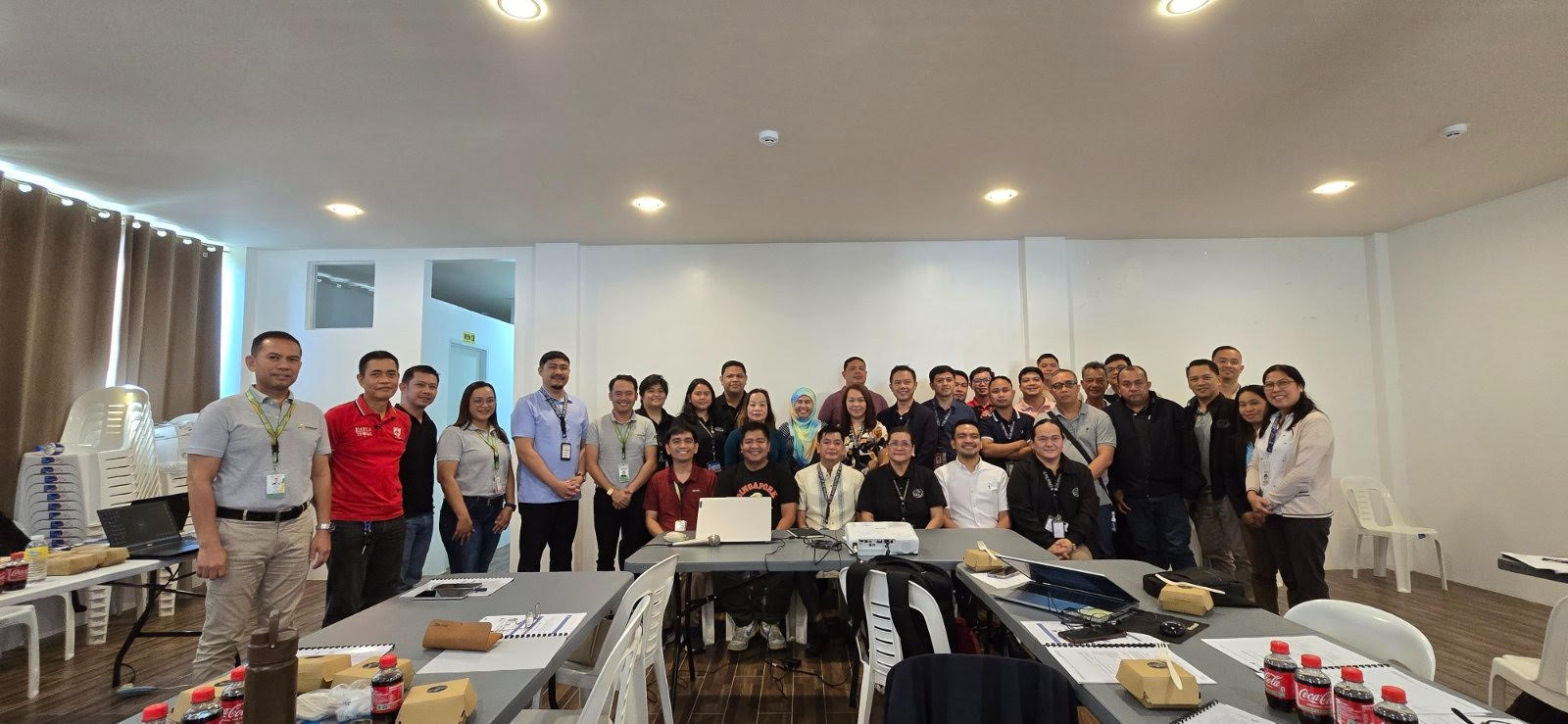
Beyond physical upgrades, Laguindingan airport personnel also took part in an Awareness and Data Assessment Workshop for CAAP Region 10 airports held on December 4 to 5. Conducted by CAAP’s Aeronautical Information Services, the workshop focused on ensuring accurate and up-to-date aeronautical data, a critical component in safe aircraft operations. Similar initiatives were recently carried out at Bohol-Panglao.
Under a unified development strategy, AIC Airports is building a nationwide network of complementary gateways expected to collectively handle around 16 million passengers by year-end, or more than 20 percent of the country’s total passenger traffic.
This includes the Mactan-Cebu International Airport as the country’s primary connectivity hub, Bohol-Panglao as a leisure gateway supporting UNESCO Global Geopark tourism, and Laguindingan as a service hub anchoring business and logistics access in Mindanao.
Modernization works at Bohol-Panglao and Laguindingan are set to accelerate from 2025 onward under multi-year concession agreements awarded in 2024. Planned developments include terminal restructuring, expansion, and capacity upgrades to meet rising passenger demand, following the operational blueprint established at Mactan-Cebu, widely regarded as the country’s most awarded and internationally recognized airport.
With safety upgrades already in place and broader transformation underway, Aboitiz InfraCapital is positioning provincial airports not just as transit points, but as resilient, future-ready gateways that raise the bar for air travel in the Philippines.