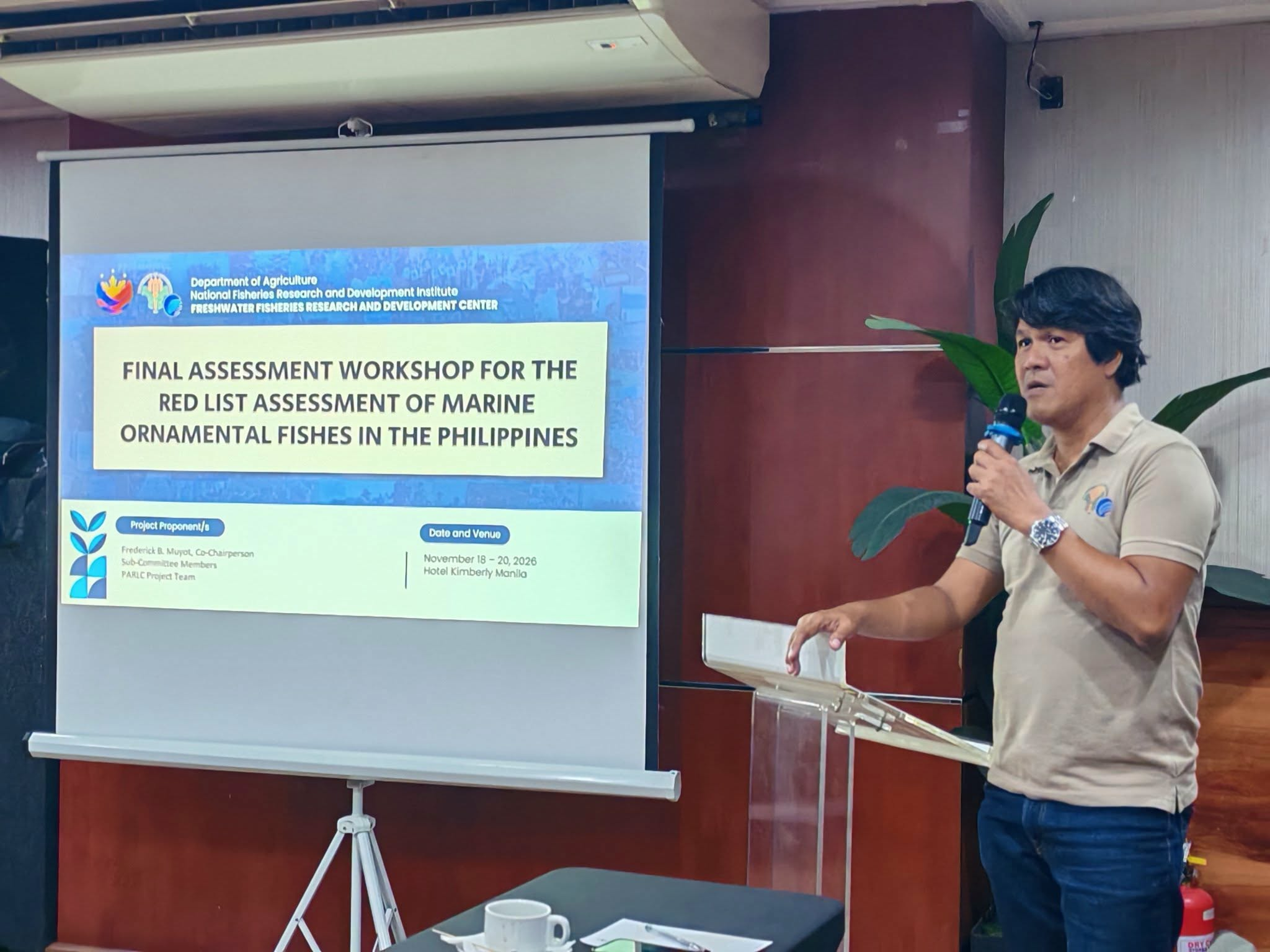

A total of 96 marine ornamental fish species underwent a local red list assessment to establish an updated scientific basis for strengthening marine biodiversity conservation and regulating the Philippine ornamental fish trade.
The assessment was conducted by the Department of Agriculture–National Fisheries Research and Development Institute (DA-NFRDI), through its Freshwater Fisheries Research and Development Center, in collaboration with the Bureau of Fisheries and Aquatic Resources (BFAR) and various academic institutions.
The findings were consolidated during the Final Assessment Workshop of Marine Ornamental Fishes in the Philippines, held from November 18 to 20, 2026, in Malate, Manila.
Organized by the Philippine Aquatic Red List Committee through its Ornamental Aquatic Organism Subcommittee, the workshop adopted the International Union for Conservation of Nature (IUCN) red list categories and criteria to determine the conservation status of the assessed species.
The assessment covered three fish families: Acanthuridae (surgeonfish), Chaetodontidae (butterflyfish) and Pomacanthidae (marine angelfish).
Researchers examined data gathered through field surveys and interviews conducted across 11 sites nationwide, alongside distribution mapping, export records and information on the ornamental fish industry.
By integrating local ecological knowledge, trade information and existing conservation initiatives, researchers established scientific justifications for identifying species potentially facing greater environmental threats and requiring appropriate protection measures.
Following peer review and consensus-building among experts, the assessed species were classified under three local red list categories: Least Concern, Near Threatened and Vulnerable.
DA-NFRDI Executive Director Dr. Maria Theresa Mutia emphasized that the assessment marked an important step toward ensuring the long-term sustainability of marine ornamental fish populations in their natural habitats.
Meanwhile, BFAR Central Office Chief Aquaculturist Dr. Joselito Somga highlighted the importance of the findings in strengthening wildlife conservation and supporting regulatory measures governing the ornamental fish trade.
Dr. Armi Torres of Mindanao State University–Iligan Institute of Technology also underscored the need for a precautionary approach to species protection, incorporating local knowledge and habitat conditions into conservation interventions.
The workshop recommended developing a dedicated field guide on Philippine marine ornamental fishes, containing information on species identification, geographical distribution and conservation status.
The proposed publication is expected to serve as a reference for fisheries management, biodiversity conservation and policy development.
The initiative seeks to strengthen science-based decision-making, promote responsible ornamental fish trading and ensure the sustainable utilization and protection of the country’s marine resources.