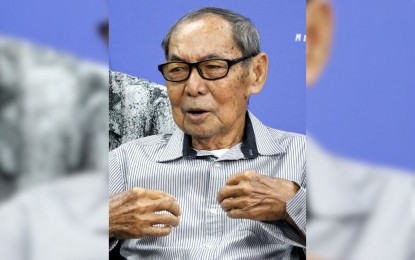
Jose Takei, an 82-year-old man of Japanese descent in the Philippines, who became stateless after being left in the Southeast Asian nation following the end of World War II, is keen to get Japanese citizenship while he is in good health.
Earlier this month, almost 80 years after the end of the war, Takei came to Japan for the first time, with the support of Japan’s Foreign Ministry. He met with his relatives in the city of Kawachinagano in Osaka Prefecture, western Japan, last Wednesday.
During the visit, he also filed for Japanese nationality with Tokyo Family Court.
Takei was born in May 1943 to a Japanese man who was an employee of the Philippines’ national railway company and an unmarried Filipino woman.
Takei’s father left the family just before his son was born to join the then Japanese military. A reference check with Japan’s welfare ministry in 2009 found that the father returned to Japan at the end of the war.
Before the war, many Japanese nationals moved overseas at the request of the government, including about 30,000 to the Philippines. Some of them married local women.
Of such Japanese, men were recruited locally by the Japanese military once the war started. Some of them died fighting in the war, while others were separated from their families as they were deported back to Japan from internment camps.
Many of the people of Japanese descent who lost their Japanese fathers were left in the countries where they were born and faced persecution for wartime invasion by Japan. Under the situation, they were left with no choice but to hide their names and the fact that they were of Japanese descent.
In the Philippines, many such people, including Takei, became stateless as the country had adopted the policy of nationality being determined by that of the person’s father.
According to the Japanese Foreign Ministry and the Philippine Nikkei-jin Legal Support Center, a nonprofit organization, the number of Japanese descendants left in the Philippines totals at least 3,800, including those who have deceased.
Of them, more than 1,800 died without being able to get Japanese citizenship, while some 50 people who are alive still hope to do so. The average age of survivors is 84.
Japanese Prime Minister Shigeru Ishiba met with Takei and two other Japanese descendants in the Philippines when he visited Manila in April this year.
Ishiba promised to help them get Japanese nationality and visit Japan.
The Foreign Ministry aims to continue providing support for Japanese descendants’ visits to the country.