
The case before the International Criminal Court is entering a new phase as hundreds more Filipinos seek formal recognition as victims in the proceedings against former president Rodrigo Duterte.
In a February 9, 2026 filing, the ICC Registry confirmed it had transmitted 227 additional application forms to the Pre-Trial Chamber, representing a total of 500 individual applicants. These individuals are asking to participate in the ongoing investigation into killings linked to Duterte’s anti-drug campaign.
The development significantly expands the number of people seeking a voice in the high-profile case and underscores the continuing legal and emotional weight of the controversial crackdown.
A growing pool of recognized victims
The latest batch follows a January 26 ruling in which the Pre-Trial Chamber authorized the participation of an initial group of 39 victims. That earlier decision marked a procedural milestone, formally opening the door for affected individuals to take part in the judicial process.
The newly transmitted applicants have been categorized under “Group A,” meaning their claims fall squarely within the temporal and geographic scope defined by the Court.
According to the ICC, the case covers alleged murders or attempted murders in Davao City from November 1, 2011 to June 30, 2016, as well as killings across the Philippines from June 30, 2016 to March 16, 2019.
This clarification narrows the focus of the proceedings while setting parameters for who may qualify for participation.
Confidentiality and security concerns
Given the gravity of the allegations and potential security risks, the identities of the 500 applicants remain protected. The Registry said the annexes containing their personal details are classified as “confidential ex parte,” accessible only to the Registry and the Common Legal Representatives of Victims.
In its filing, signed by Marc Dubuisson on behalf of Registrar Osvaldo Zavala Giler, the Registry described the transmission as a procedural requirement that enables judicial review of the applications.
If admitted, the applicants will not act as prosecutors but will be allowed to present their views and concerns through legal counsel as the case advances toward the confirmation of charges stage.
Legal process still unfolding
Rodrigo Duterte was arrested on March 11, 2025 upon arrival from Hong Kong pursuant to an ICC warrant linked to the drug war probe. He was flown the same day to The Hague in the Netherlands, where the Court is based.
The warrant alleges that as president, Duterte created, funded and armed death squads that carried out killings of alleged drug users and dealers. Duterte has repeatedly denied wrongdoing.
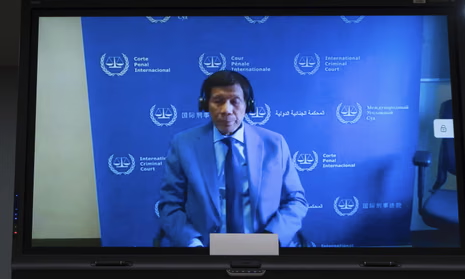
He first appeared before ICC judges via video link on March 14, 2025. A scheduled confirmation of charges hearing last September 23 was postponed following a request from the defense team. The Pre-Trial Chamber has since denied the defense’s request for interim release.
Why victim participation matters
Under ICC rules, victim participation is a distinctive feature of the Court’s framework. Recognized victims may submit observations and raise concerns through legal representatives, especially on matters affecting their interests.
While this does not determine guilt or innocence, it broadens the proceedings beyond a purely state-versus-accused format and gives survivors and families a structured channel within the international justice system.
With 500 more applicants now awaiting judicial determination, the Duterte case continues to evolve — not only as a legal battle over accountability, but as a test of how international law addresses allegations tied to one of the most controversial anti-drug campaigns in recent Philippine history.