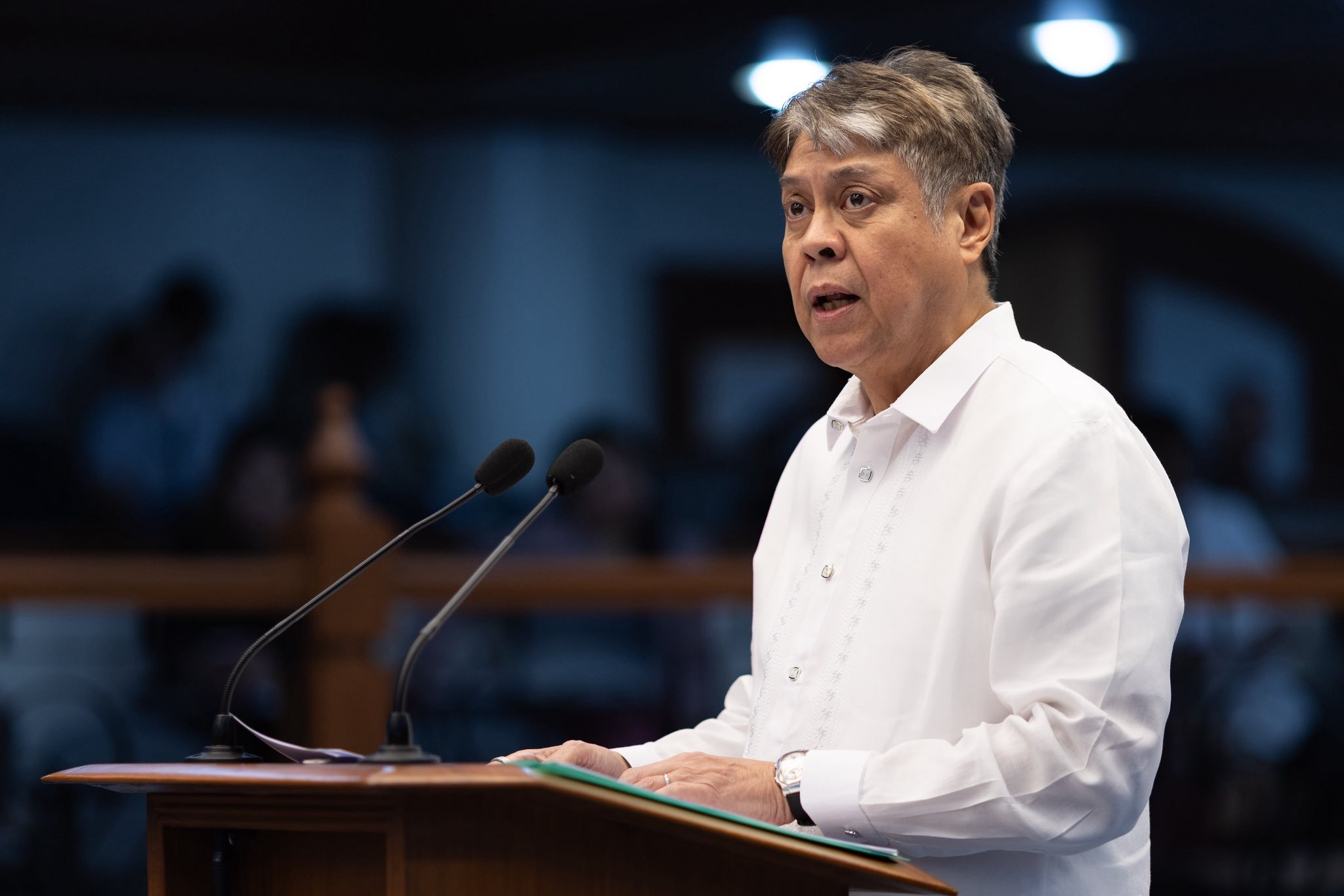

Sen. Francis “Kiko” Pangilinan – Photo from Kiko Pangilinan/Facebook
Senator Francis “Kiko” Pangilinan said the proposed 2026 national budget seeks to address hunger by improving child nutrition while channeling income directly to Filipino farmers.
He described the spending plan as the most transparent yet, saying it confronts hunger on two fronts through nutrition programs and agricultural support.
“Sa pagkakataong ito, tinatalaga ng pambansang badyet na bumili ang mga public school ng gatas sa mga lokal na maggagatas. Dalawa agad ang lulutasing problema nito sa gutom: nutrisyon ng mga batang Pilipino at kita ng mga magsasaka (At present, the national budget requires that public schools buy milk from local dairy farmers. This way, we fight hunger on two fronts: nutrition for children and income for farmers),” said Pangilinan, a bicameral conference committee member and vice chairperson of the Senate Committee on Finance.
“Merong convergence sa expanded school-feeding, early-childhood interventions, at sa mga prinsipyo ng Sagip Saka dahil magkakaugnay ang kalusugan ng ating mga anak sa presyo ng pagkain at sa kita ng mga nagpapakain sa atin (There’s convergence in expanded school-feeding, early-childhood interventions, and Sagip Saka principles because our children’s health is related to the price of food and to the income of those who feed us),” he added.
Sagip Saka allows government agencies to directly purchase food from local producers without public bidding.
Budget documents show that funding for the Philippine Carabao Center more than doubled to ₱2.08 billion, largely due to a ₱1.12-billion milk feeding component for Department of Education schools.
The National Dairy Authority also received a ₱2.38-billion allocation, including ₱1.85 billion for the milk component of the School-Based Feeding Program.
Pangilinan said linking local dairy production to school feeding reflects his long-standing push for outcome-focused agriculture that supports both farmers’ incomes and public health.
A joint study by the Philippine Institute for Development Studies and the United Nations Children’s Fund Philippines found that one in four Filipino children is stunted due to chronic malnutrition, with rates reaching 40 percent in the poorest households.
Released last October in the book “Raising the Bar: Understanding and Solving Chronic Malnutrition in the Philippines,” the study said the 24 percent stunting rate is equivalent to about 2.6 million Filipino children under five.
“Ibig sabihin ng pag-aaral, kung hindi tayo gagalaw agad-agad, 2.6 milyong batang Pilipino ang magiging mahina hindi lang sa pangangatawan kundi pati sa pag-iisip ” Pangilinan said.
“Malusog ang hinaharap ng bansa kung malusog ang kabataan,” he added.