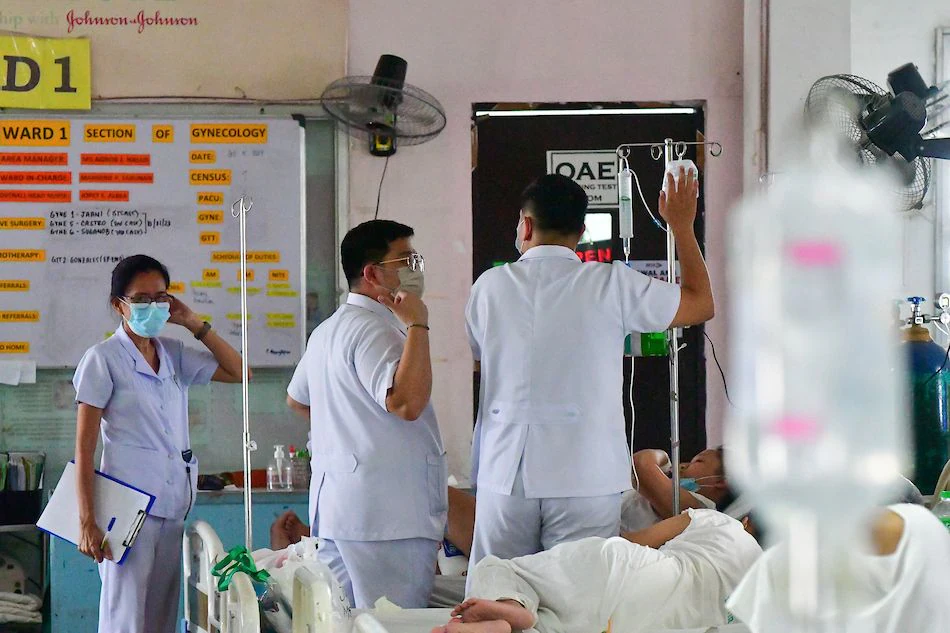
A new study by Ateneo de Manila University highlights significant barriers to implementing Universal Health Coverage (UHC) in the Philippines, including gaps in training, poor working conditions, and restrictive hiring rules. The research, titled “Health workforce issues and recommended practices in the implementation of Universal Health Coverage in the Philippines: a qualitative study,” indicates that most Filipino doctors and nurses are trained primarily for hospital-based care, leaving them unprepared for the policy and administrative roles required in public health.
“May mga doctor and nurse, they spend significant amounts of their time in the hospital and that’s perfectly fine… but you see, when you go to public health work… you have to be in charge of the implementation of government programs, how you will roll these programs on the ground,” said Veincent Christian Pepito, the study’s co-author. He emphasized that these critical skills are not adequately covered in medical or nursing education.
The study also points out that civil service and licensure requirements often exclude qualified applicants from non-clinical roles. Local government budget caps further restrict hiring flexibility, making it challenging for local government units (LGUs) to recruit necessary personnel. Although a joint government circular lifted the 45-percent salary cap on local personnel services, LGUs remain cautious about acting on it due to fears of violating budget rules.
“It’s probably better that these people who implement government programs do not have a nursing license, so that nursing, the people who are training to provide clinical care, can provide it instead,” Pepito noted.
High training costs also deter participation in UHC, with some clinics paying up to P50,000 for required staff courses but receiving only P2,000 in government reimbursement. This financial strain, along with low pay and better opportunities abroad, continues to drive workforce attrition.
To address these issues, the study recommends implementing scholarships with return service agreements, offering free tuition for health workers’ dependents, adopting flexible hiring practices, reforming curricula in primary and community care, and revising the Local Government Code. These measures aim to create a more supportive environment for health workers and enhance UHC implementation in the Philippines.
One thought on “Ateneo study reveals barriers to universal health coverage in the Philippines”